
Blog · Pendulum
Pendulum: setting your convention (yes, no, stop) and adjusting its string
A pendulum answers through its movement. But you still need to have agreed with it, once and for all: that is the convention. And to have given it its right length of string. Here is how I do it, with my three circles and my knot, and what I do the day it stops answering.
A weight at the end of a string: the pendulum, in simple words
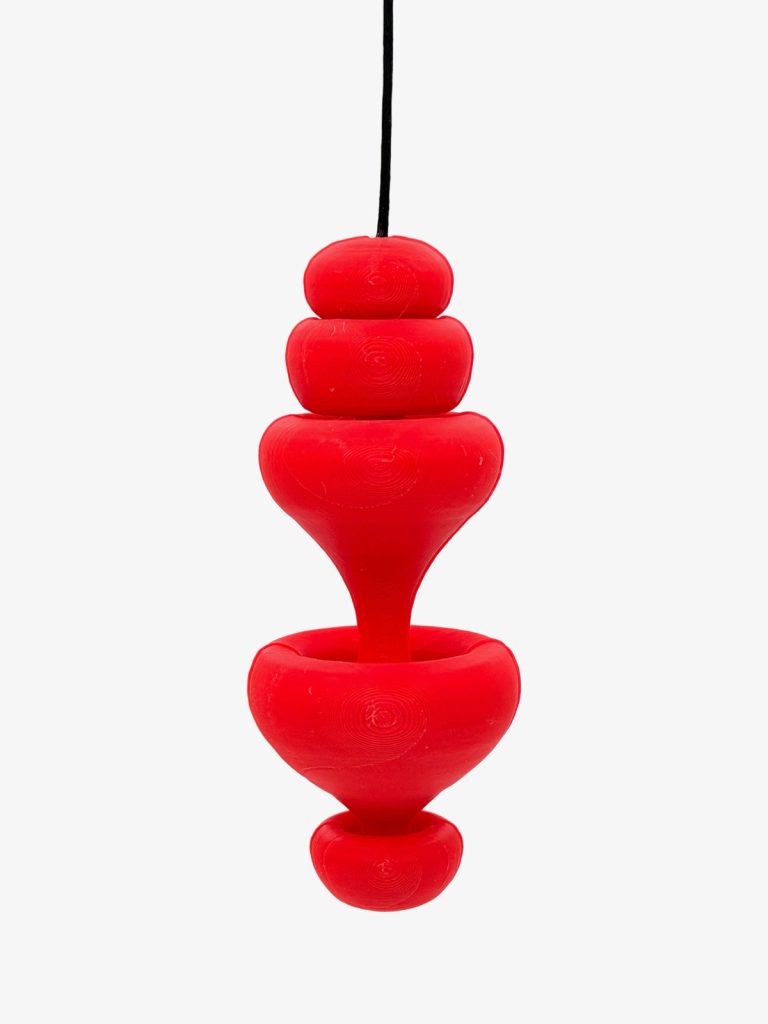
A pendulum is a small weight at the end of a thread. You hold it between two fingers, you ask a question, and it answers through its movement: a circle one way, a circle the other way, or nothing. It is the everyday tool.
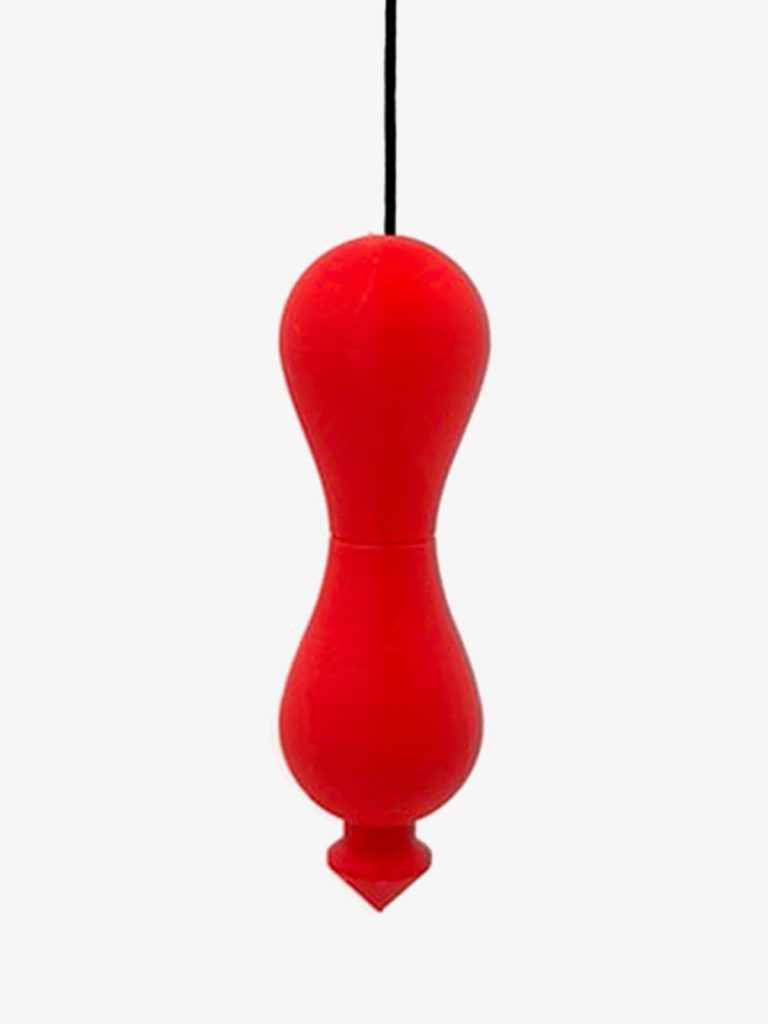
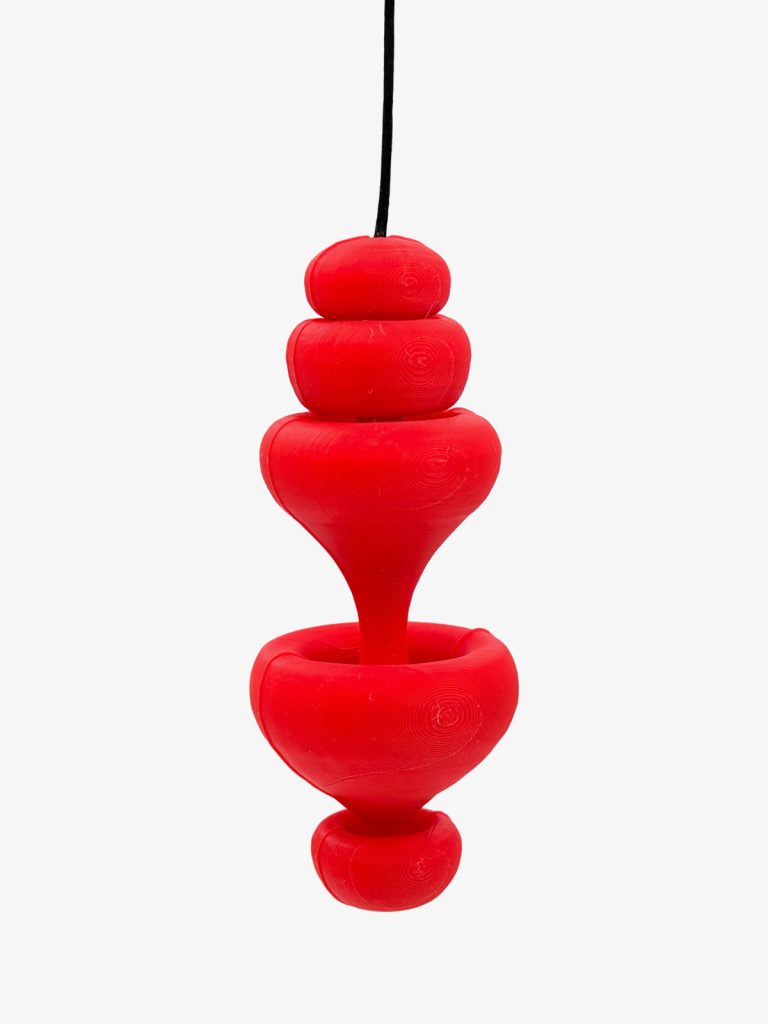
Mine, I make them in my workshop in Entraigues-sur-la-Sorgue, near Avignon. The one I most often have in my hand is my volute pendulum of the Jean de La Foye type: 9 cm high, all in volutes, printed in red in a plant-based plastic (PLA). There is also the two-sphere pendulum of the Bélizal-Chaumery type: two 2.5 cm spheres on the same axis, 27 g, lead-free.
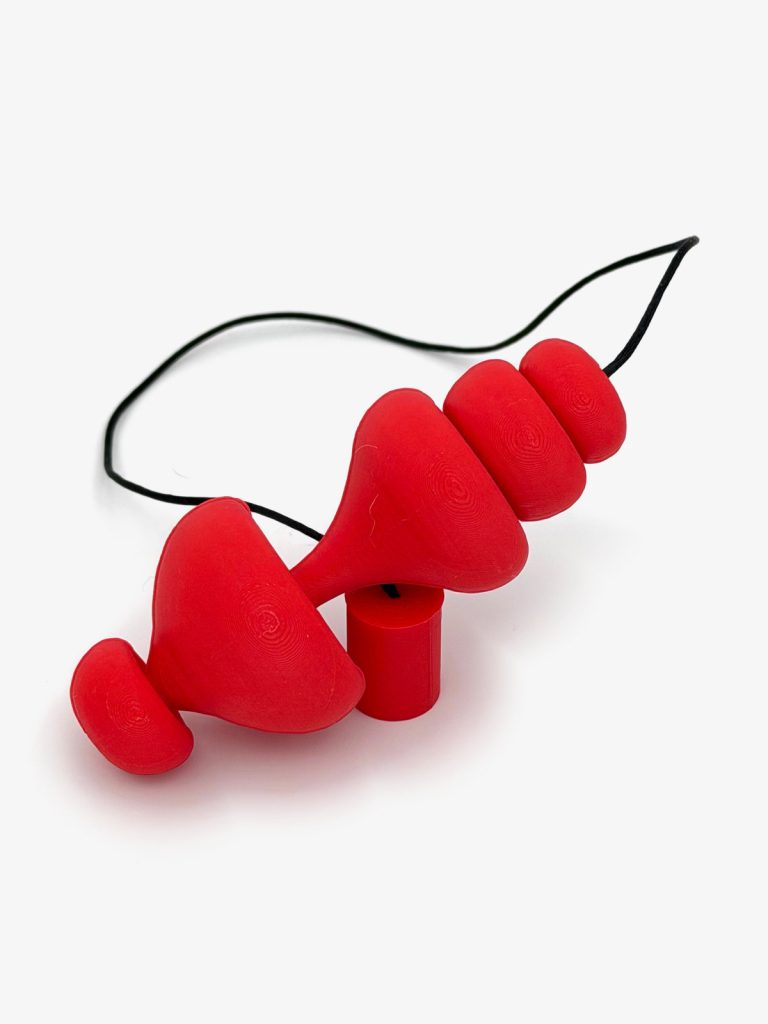
All are mounted on a string, never on a chain, with a small tube at the top: this tube is the little end piece by which you hold the string. You will see why the string matters as much as the pendulum.
The convention: three circles, and an agreement made once
The convention is the agreement between you and your pendulum on what each movement means. Without a convention, a circle is only a circle. With it, it is an answer.
Mine fits on three drawn circles, one red, one blue, one green. A circle to the left means no. A circle to the right means yes. And the point, when the pendulum stays still, means stop.
You set your convention only once, at the beginning. And it is specific to each person: your pendulum may very well say yes where mine says no. It is not a mistake, it is your own agreement. You do not copy someone else’s convention; you set your own, then you stick to it.
Adjusting the string: the knot method
A pendulum has a length of string that is its own, and it is the pendulum that gives it to you. Here is how I connect to a new pendulum.
- I hold the string near the small tube.
- I set the pendulum going anticlockwise.
- I let the string slide between my fingers, gently.
- At the place where it stops and sets off again to the right, I tie a knot. That is its length.
This knot is not final. Over the years, the string gets longer: 14 cm at the beginning, 25 cm today for me. It is not the thread that grows, it is the right length that changes, and the knot follows. That is why a string is better than a chain: it slides between the fingers, and you can tie a knot in it. A chain, no.
In my training bag, the pendulum comes on its string, to be adjusted by yourself, exactly like that: this is where my method begins. Energy training is a bag you take away to learn at home, with the real tools.
The day it stops answering
It happens to everyone: a question, and the pendulum stays there, or goes off any old way. Almost never is the pendulum at fault. Almost always, it is the connection that has shifted.
Let me explain. You cannot read, either a person or a place, without having put yourself in line with your own energy. Every morning, and before each session, I follow the same order: the pendulum, then what I call the 15.30, that is, the cosmo-telluric connection, the link between sky and earth that passes through us; then I release what could get in the way of my reading; only then do I read. Less than ten minutes, all included. When a line does not go through, I redo the 15.30. The complete gesture is in “Putting yourself in order before reading”.
If it still does not go through, it is not a day for reading, and you come back to it later. Worry gets in the way of reading more surely than anything else. In the evening, you are not a practitioner. None of this is a failure: it is the method telling you to wait.
What I am often asked
My pendulum turns the other way from my sister’s: which one is right?
Both. The convention is specific to each person: for her, the circle to the right perhaps means no; for you, yes. What matters is to have set it once, at the beginning, and never to change it again.
Do you need a chain, or is a string enough?
A string, and it is even better. All my pendulums are mounted on a string with a small tube, because the string slides and can be knotted: it is what lets you find the right length, and find it again when it changes.
If I change pendulum, do I start all over again?
No. The convention is yours, it stays. The length of string, though, is adjusted for each pendulum, with the knot method.
Does it answer any question?
It answers yes, no or stop, to a simple and clear question. For a person, I always start by reading their level from 0 to 9: at 9, everything flows. It is the scale I explain in “The rule of 9”. And for presences (an energy that is not ours and that has attached itself), I put the pendulum down and take the antenna, held in both hands: the arc passes through the heart.
Your pendulum does not answer the way you would like?
Call me: we look at it together, and if it is not the pendulum, we talk about that too. The first assessment by phone is free.
Call +33 6 80 72 12 54or write to me on WhatsApp, or at contact@centre-coherence.fr
What I describe here is an energy practice, for well-being: it makes no diagnosis, treats no illness and replaces neither medical advice, nor a treatment, nor psychological care.